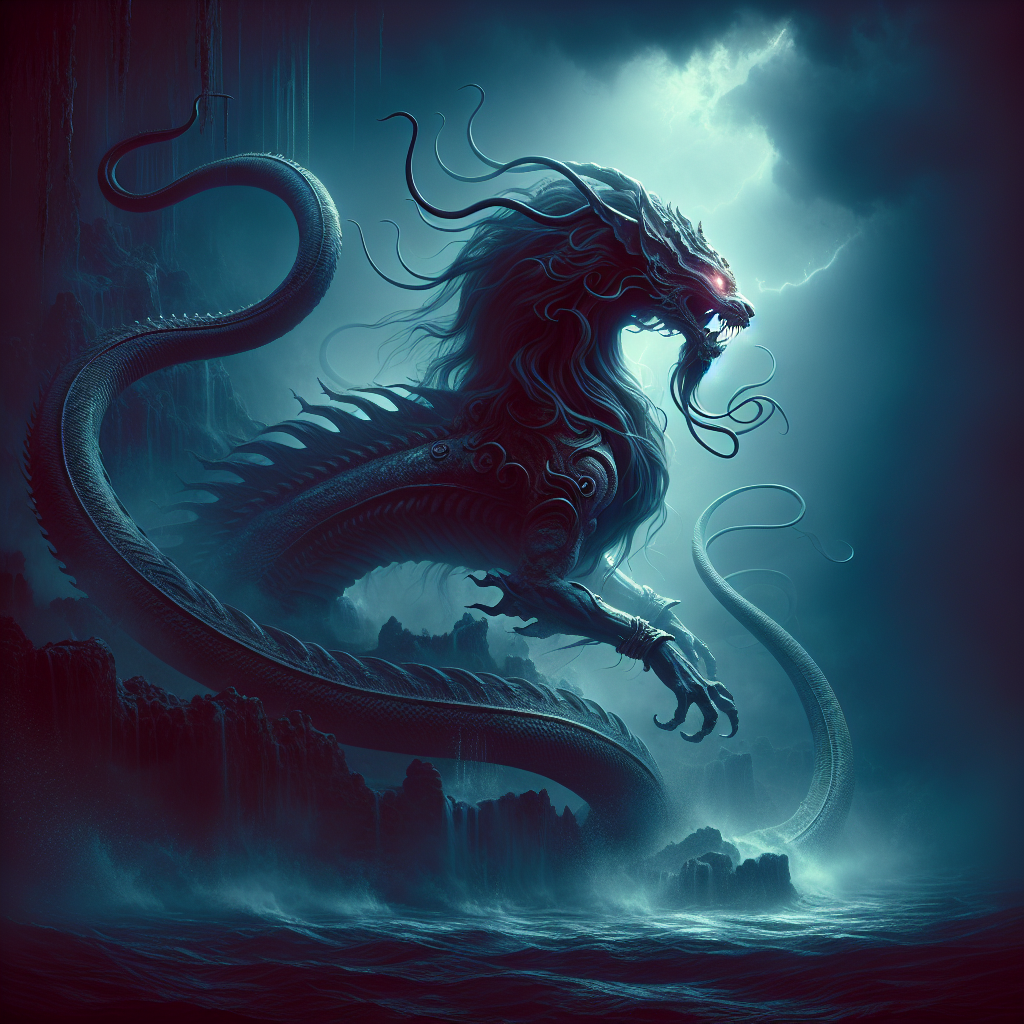
Pishacha
Description
Demon that haunts cremation grounds feeding on human flesh. Can possess the living causing madness and speaking in unknown languages
Origin & Background
Pishachas are carnivorous demons that appear in Indian religions, specifically in Hinduism and Buddhism. They are often referred to as embodiments of evil.
The Legend
According to the Mahabharata, the original Pishachas are creations of Brahma. This epic provides various interpretations of them residing in the palaces of Kubera or Brahma, worshipping Shiva and Parvati. Pishachas are sometimes depicted as fighting against Karna on the side of Ghatotkacha, but it is also said that they served the Kauravas and acted as the horses of Alambusha's chariot. In other legends, they are described as the sons of Krodha, the personification of anger, or as the daughter of Daksha, known as Pishacha. They are depicted as beings with swollen veins and protruding red eyes, and it is believed that they possess their own language called Paiśāci. One legend suggests that they are considered the sons of Krodhabasa, the daughter of Kashyapa and Prajapati Daksha. According to the 7th-century Nirmāṇatapurāṇa, two tribes named Naga and Pishachas were said to inhabit the Kashmir Valley. Pishachas are fond of darkness and are traditionally described as wandering beings around cremation grounds alongside bhūtas and vetālas. They have the ability to shapeshift and become invisible, and they feed on human energy. Sometimes, they possess humans and alter their thoughts, causing the victims to suffer from various ailments and disorders similar to mental illness. Certain mantras are used to heal these victims and expel Pishachas. To ward off Pishachas, offerings are made to them during specific religious rituals and festivals. If burial procedures are not properly conducted, the deceased may become a Pishacha after a certain period, unable to leave the corpse. They lose the ability to eat and drink, lose their sight, and suffer severe pain, but instinctively crave living beings, detecting their smell and presence to attack.
Variants
Ancient texts mention the Dard people of northern Kashmir as 'Pishacha', and the Dard language is referred to as Paiśāci. They are considered descendants of Prajapati Kashyapa. The famous Brihatkatha contains a vast amount of Indian legendary tales and was written in the Paiśāci language by the author Gunadhya in the 7th century.
In Popular Culture
The Royal Institute Dictionary of Thailand states that the Thai word 'ปิศาจ' (pisat) is derived from the Sanskrit Pishacha and is defined as 'ghost'. Pishachas appear in some stories of Thai folklore and are considered one of the spirits in Hindu-Buddhist traditions. They are also depicted in some Buddhist temple paintings.
This article is based on the Wikipedia article "Pishacha" (CC BY-SA 4.0) · Wikipedia
Abilities
- Possession
- Predation