Kraken
Description
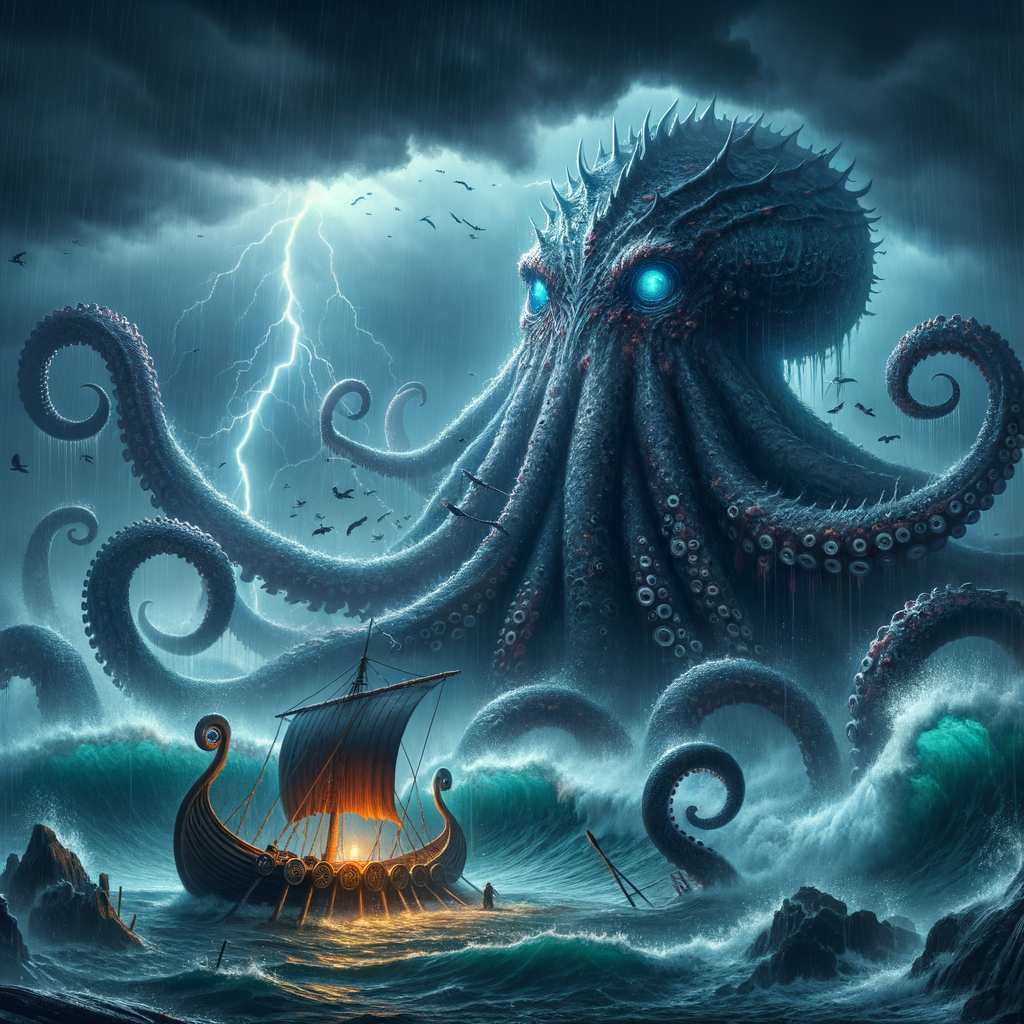
Colossal sea creature off Norway's coast, large enough to be mistaken for an island. Drags ships underwater with massive tentacles. First recorded by Erik Pontoppidan in 1752
Origin & Background
The legend of the Kraken is about a gigantic sea monster that appears in the Norwegian Sea off the coast of Norway, believed to be etymologically similar to cephalopods. The Kraken legend is thought to have originated from sightings of giant squids. The Kraken was first mentioned in 1646 in the Norwegian glossary by Christen Jensen, and was later described in detail in Francesco Negri's travelogue in 1700 and in the records of Danish-Norwegian missionary Hans Egede in 1734. However, the earliest description of the Kraken is often attributed to the Danish bishop Pontoppidan (1753).
The Legend
The Kraken is described as a creature with multiple heads and claws, known for dragging ships down. Hans Egede claimed that the Kraken is the same as the Hafgufa of Iceland, and it is often said that the Kraken lies in wait in the deep sea when fishermen go out to sea. Fishermen are said to have to turn their boats around immediately if they sense the Kraken rising, and when the Kraken reveals itself above the surface, it is said to resemble a reef covered with growths like seaweed.
In Popular Culture
The Kraken has appeared multiple times in popular culture. Victor Hugo described the squid from the Guernsey legend as the Kraken in his 1866 novel 'The Toilers of the Sea', which led to the depiction of the Kraken in Jules Verne's novel 'Twenty Thousand Leagues Under the Sea'. The modern Kraken is used as a symbol of sea monsters in various media and frequently appears in films and literature.
This article is based on the Wikipedia article "Kraken" (CC BY-SA 4.0) · Wikipedia
Abilities
- Unknown
Sources
- Erik Pontoppidan