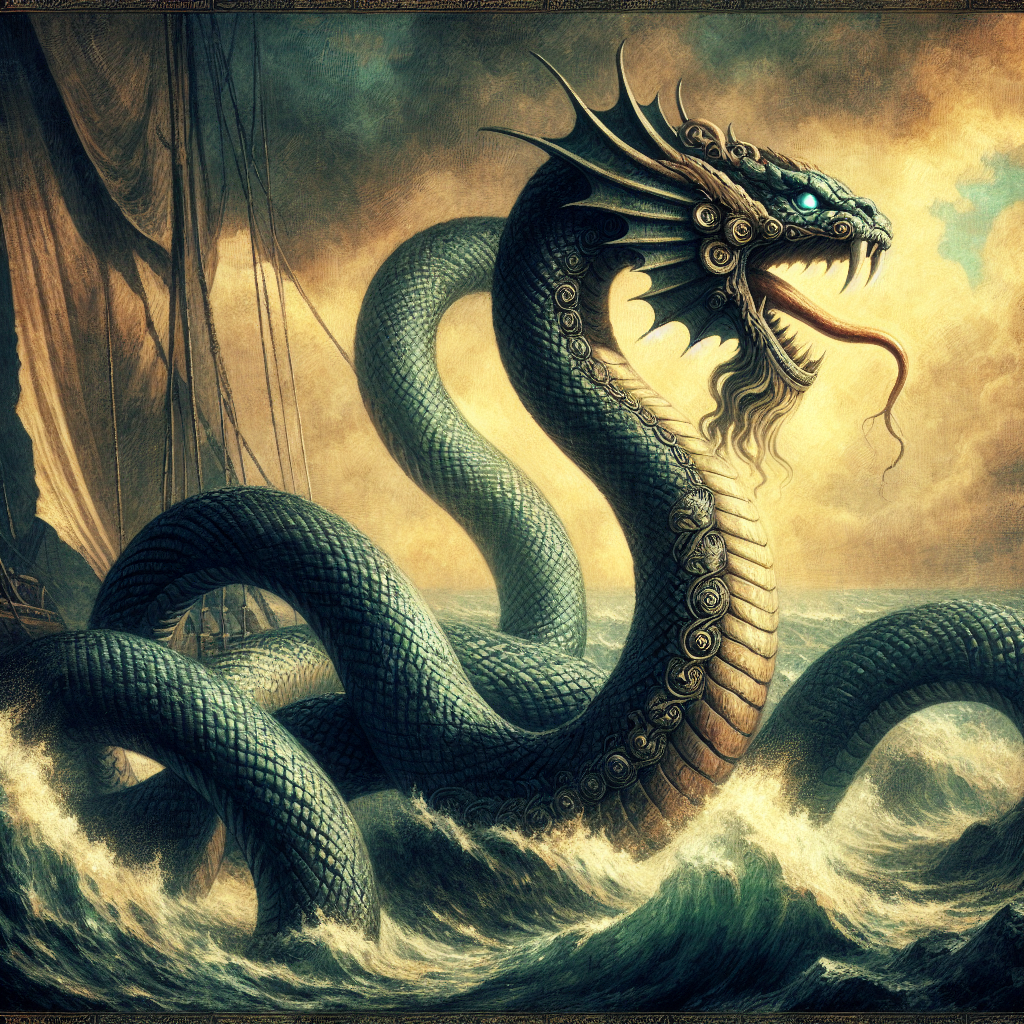
Bound monster
Description
A serpent from the folklore of Norway. The bound monster is an important motif in Norse mythology.
Origin & Background
The concept of the Bound monster is an important motif in Norse mythology. This theme suggests that the enemies of the gods are bound or constrained in some way, but are ultimately destined to gain freedom during Ragnarok and cause destruction.
The Legend
The concept of the Bound monster particularly applies to Loki and his three children with his giant wife Angerboda: the wolf Fenrir, the Midgard serpent Jormungandr, and the queen of the underworld Hel. Loki is bound as revenge for the death of Baldur, and this story is fully recounted in 'Gylfaginning'. While Loki writhes in his bindings, his wife Sigyn holds a bowl above his head to catch the poison dripping from the serpent. During Ragnarok, Loki gains his freedom to fight against the gods and engages in a deadly duel with Heimdall. Fenrir's role is revealed through prophecies of the end times, and the gods bound him with magical chains made by dwarves. He refused to be bound until one of the gods promised to place his hand in Fenrir's mouth. The brave Tyr undertook this task, but as the chains tightened, Fenrir sensed their trickery and bit off Tyr's right hand. In Ragnarok, Fenrir is destined to break his bonds and kill Odin, and Odin's death will be avenged by the god Vidar.
This article is based on the Wikipedia article "Bound monster" (CC BY-SA 4.0) · Wikipedia
Abilities
- Poison
Weaknesses
- Certain rituals
Sources
- Wikipedia (Norse creatures)
Genres
Story Hooks
- A serpent from the folklore of Norway. The bound monster is an important mot