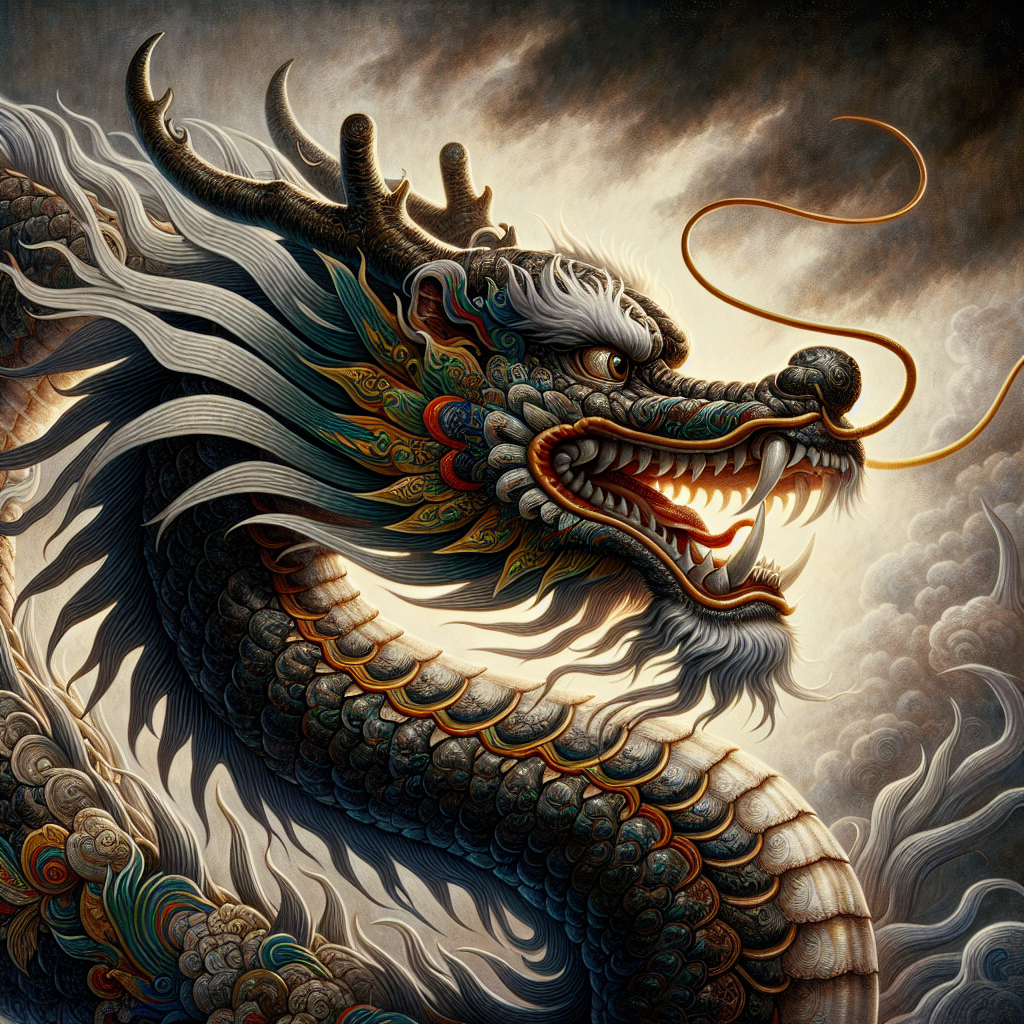
한국의 용
Description
A serpent from the folklore of Korea. Korean dragons (Korean: 용/룡) are legendary creatures in Korean mythology and folklore.
The Legend
The Korean dragon (용/룡, yong) is a legendary being passed down in Korean mythology and folklore, also known as mir (미르) or miri (미리). The Korean dragon is primarily regarded as a benevolent being associated with water and agriculture, known for bringing rain and clouds. Many Korean dragons are said to have lived in rivers, lakes, the sea, or deep mountain ponds. Traditionally, the Korean dragon has established itself as a powerful symbol representing authority, protection, and divine legitimacy. For example, the royal robe worn by kings and crown princes during the Joseon Dynasty is intricately embroidered with five dragons, symbolizing the king's supreme authority over nature and the cosmic order.
In Popular Culture
In Korean popular culture, there are various expressions related to dragons. The 2007 Korean film 'D-War' features two imugi (이무기) competing for a yeouiju (여의주). In this film, the imugi are depicted in two forms of good and evil, with each form's physical differences emphasized. In the 2020 Korean drama 'My Roommate is a Gumiho' (구미호: 여우누이뎐), an imugi appears in human form as a villain with the ability to possess humans and spread deadly diseases. Additionally, in the 2025 drama 'The Ghost's Palace' (유령의 궁전), the imugi Gangcheol (강철이) seeks revenge on a human child to ascend to the heavens.
This article is based on the Wikipedia article "Korean dragon" (CC BY-SA 4.0) · Wikipedia
Abilities
- Supernatural power
Weaknesses
- Certain rituals
Sources
- Wikipedia (Korean creatures)
Genres
Story Hooks
- A serpent from the folklore of Korea. Korean dragons (Korean: 용/룡) are legend