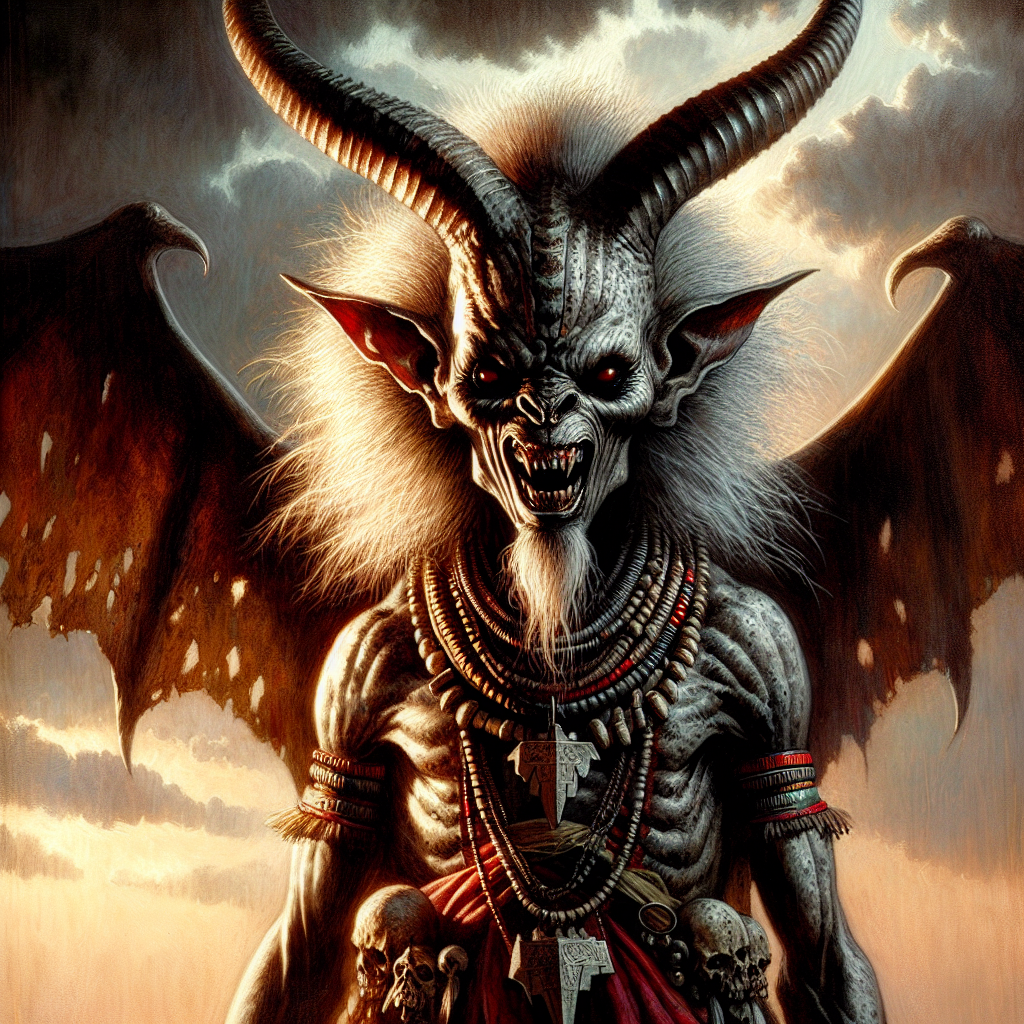
Shetani
Description
Malevolent spirits in Swahili folklore that cause disease, madness and misfortune. Can possess humans and must be exorcised by traditional healers
Origin & Background
Shetani is a being derived from East African mythology and popular belief, primarily signifying an evil spirit with a masculine character. This term originates from Swahili and is borrowed from the Arabic 'Shaitan', meaning 'devil' or 'adversary'. It shares the same etymology as the English 'Satan'.
The Legend
Shetani is an evil spirit with various forms and abilities, often appearing in distorted human or animal shapes. They are depicted as asymmetrical figures, typically sculpted with one eye or a mouth without teeth, and a body that bends backward. There are several types of shetani, including the dangerous 'ukunduka', which absorbs energy through sexual contact, the carnivorous 'chameleon shetani', and the harmless 'shuluwele', which gathers herbs to deliver to a sorcerer. Notably, a shetani named 'Popo Bawa' is known to be extremely notorious for attacking people.
Variants
Beliefs in shetani are a modern continuation of pre-Islamic faiths, with various ethnic groups recognizing their existence. For example, the Segeju people of Tanzania acknowledge eight or ten soul tribes, each with its own unique name and character. They have maintained beliefs regarding the possession and exorcism of shetani.
In Popular Culture
Shetani continues to be expressed in Makonde sculpture art, ranging from artworks sold at airports to high-end art. Sculptor George Lilanga gained international fame through his works, and his shetani sculptures and paintings have been exhibited at international exhibitions.
This article is based on the Wikipedia article "Shetani" (CC BY-SA 4.0) · Wikipedia
Abilities
- Possession