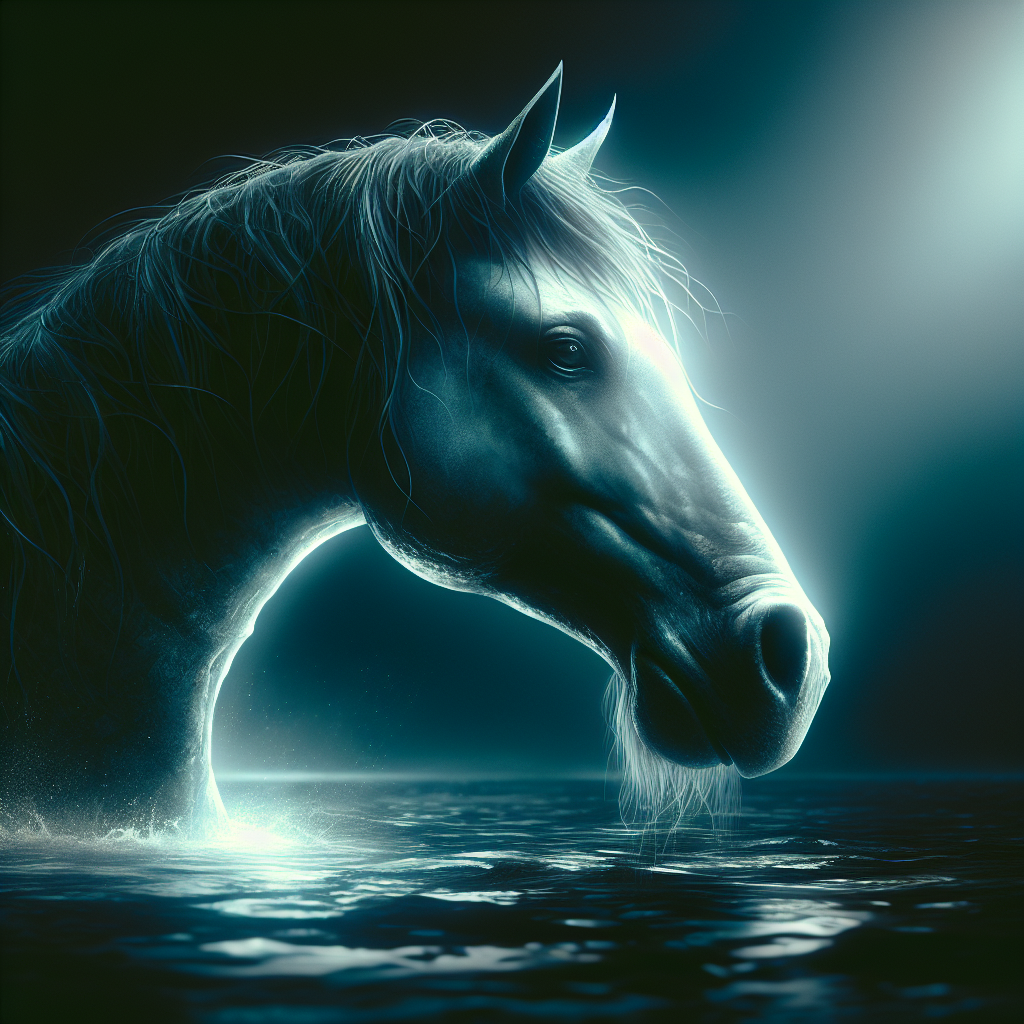
Kelpie
Description
Shape-shifting water spirit appearing as a beautiful horse by lochs and rivers. Children who mount it find their hands stuck as it drags them underwater
Origin & Background
In Scottish folklore, the name Kelpie refers to a mythical spirit believed to inhabit the lakes of Scotland. The etymology of this term is uncertain, but it may have originated from the Gaelic words 'calpa' or 'cailpeach'. The earliest record of the term Kelpie being used to describe a mythical creature is found in a poem by William Collins, written before 1759.
The Legend
The Kelpie is the most common water spirit in Scottish folklore, often depicted as a creature resembling a gray or white horse. This creature can transform into human form, and in some traditions, it is said to retain hooves when it changes into a human. Kelpies are known to lure humans into deep water, dragging them under, and various legends tell of children riding on the back of a Kelpie and falling into the water.
Variants
Kelpies appear in various forms across different regions of Scotland, with similar legendary creatures such as the shoopiltee in Shetland and the tangie in Orkney. Additionally, creatures like the ceffyl dŵr in Wales and the cabbyl-ushtey on the Isle of Man are also considered similar to Kelpies.
In Popular Culture
Kelpies have been expressed in various forms in art and literature, with 'The Kelpies', two 30-meter tall steel sculptures completed in October 2013 in Falkirk, being a notable example. These sculptures were designed to celebrate Scotland's horse-centered industrial heritage.
This article is based on the Wikipedia article "Kelpie" (CC BY-SA 4.0) · Wikipedia
Abilities
- Shapeshifting