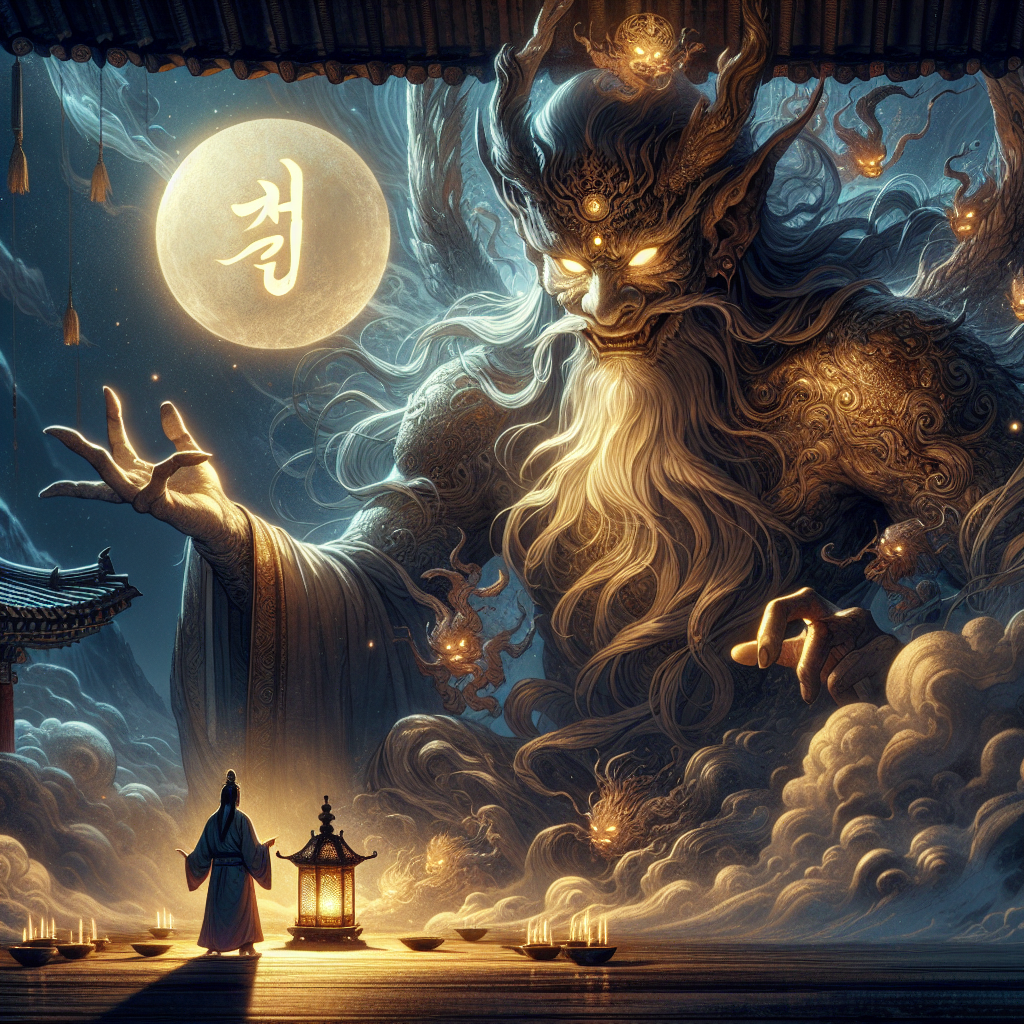
Duduri (두두리)
Description
Tree spirit and folk deity from Silla and Goryeo periods. Originally a local earth god of the Gyeongju region. Faith disappeared following the Mongol invasions of Korea
Origin & Background
The name Duduri is a native Korean word, transliterated in Hanja as 豆豆里 or 豆豆乙. Its exact linguistic origin is uncertain. The worship of Duduri is believed to have started during the Silla period. The 16th-century geographical text, Sinjeung Dongguk Yeoji Seungnam, records that there was a shrine dedicated to Duduri in a forest called Wanggasu, located 10 ri south of Gyeongju, where sacrifices and offerings were made to the wood deity. This suggests that Duduri was an important local god responsible for the well-being of the community and the forest. The worship of Duduri seems to have disappeared after the mid-Goryeo period. With the devastation of the Gyeongju area due to the Mongol invasions, the community that sustained this belief weakened, and later, during the Joseon period, Confucianism became the state ideology, systematically suppressing folk religions and shamanistic beliefs, leading to the forgetting of many local deities.
The Legend
Duduri is a wood deity or folk god worshipped in the Gyeongju area. Duduri was a guardian deity for which official rituals were performed, and historical records indicate connections to specific locations and powerful political figures. Many scholars consider Duduri to be a direct prototype or origin figure of the more widely known dokkaebi (goblin).
In Popular Culture
In the KBS historical drama 'Warrior Era' from 2003-2004, a shaman character named Duduri appears, played by Jeon Mu-song, serving as an important advisor to Lee Ui-min. This directly dramatizes the dictator's reliance on Duduri.
This article is based on the Wikipedia article "Duduri" (CC BY-SA 4.0) · Wikipedia
Abilities
- Unknown