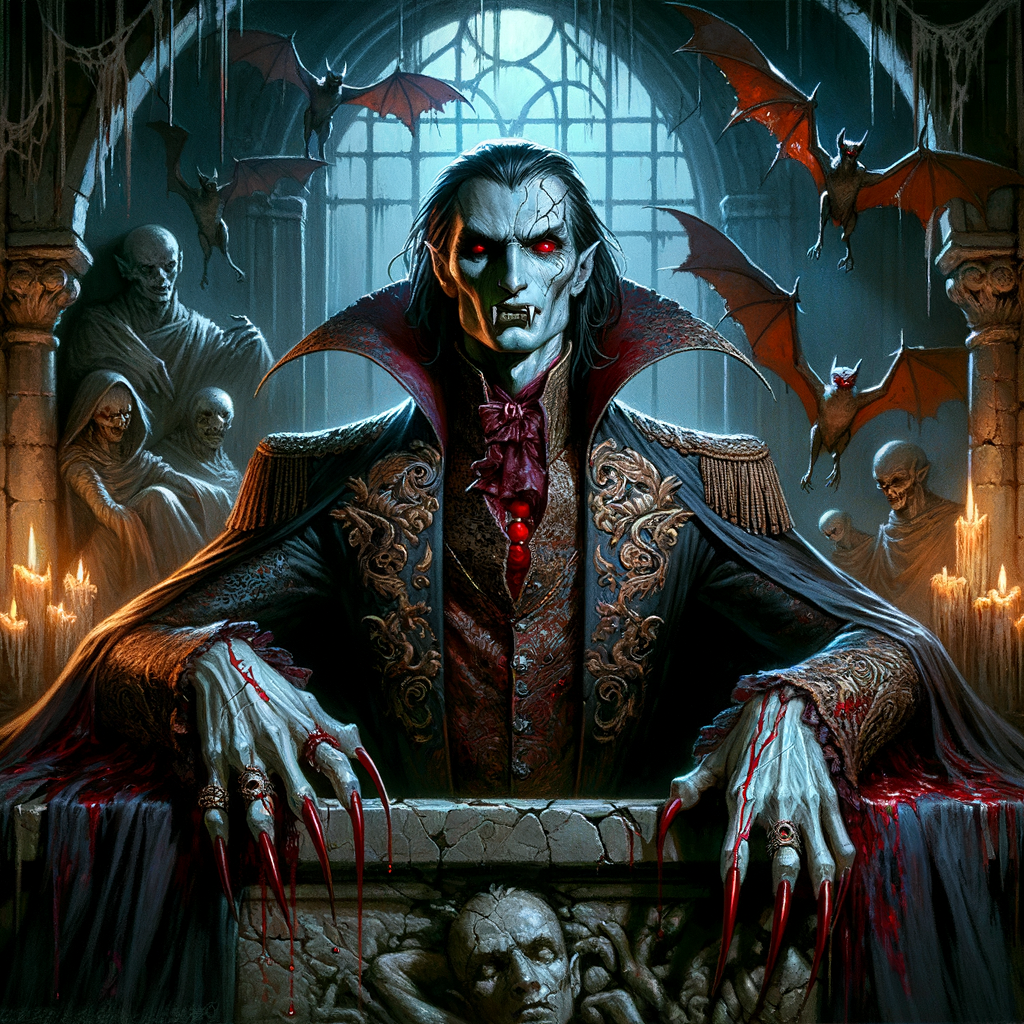
Strigoi
Description
Undead that rises from grave to drain life from family members
Origin & Background
The word Strigoi is derived from Romanian and is a form that adds the augmentative suffix -oi to the root related to the Latin strix or striga. Otila Hedeşan mentions that a similar suffix appears in related terms such as moroi and bosorcoi, suggesting that this parallel origin indicates membership in the same 'mythical micro-system.' This root is particularly associated with owls, and similar terms can be found in Romance languages such as the Italian strega (witch) or the French stryge (a bird-woman that sucks the blood of children).
The Legend
In Romanian mythology, Strigoi are tortured souls said to rise from their graves. They are believed to have the ability to transform into beasts, become transparent, and gain vitality from the blood of their victims. Strigoi are historically linked to modern vampires, and Bram Stoker's Dracula can be seen as a modern interpretation of Strigoi.
Variants
In Romania, there are various names for Strigoi, including Moroi in western Transylvania, Wallachia, and Oltenia, and vidmă, vârcolacul, Cel-rau, or vampire in Bukovina. Strigoi are classified into living sorcerers known as Strigoi viu and dead Strigoi known as Strigoi mort, with the latter being considered the most dangerous.
In Popular Culture
Even in modern times, Strigoi still hold an important place in Romanian culture, and in 2004, an incident occurred where a woman claimed to have been visited by a deceased relative, leading her family to organize a vampire hunt. This incident demonstrates that traditional beliefs about Strigoi still exist.
This article is based on the Wikipedia article "Strigoi" (CC BY-SA 4.0) · Wikipedia
Abilities
- Absorption
- Blood-drinking