Draugur
Description
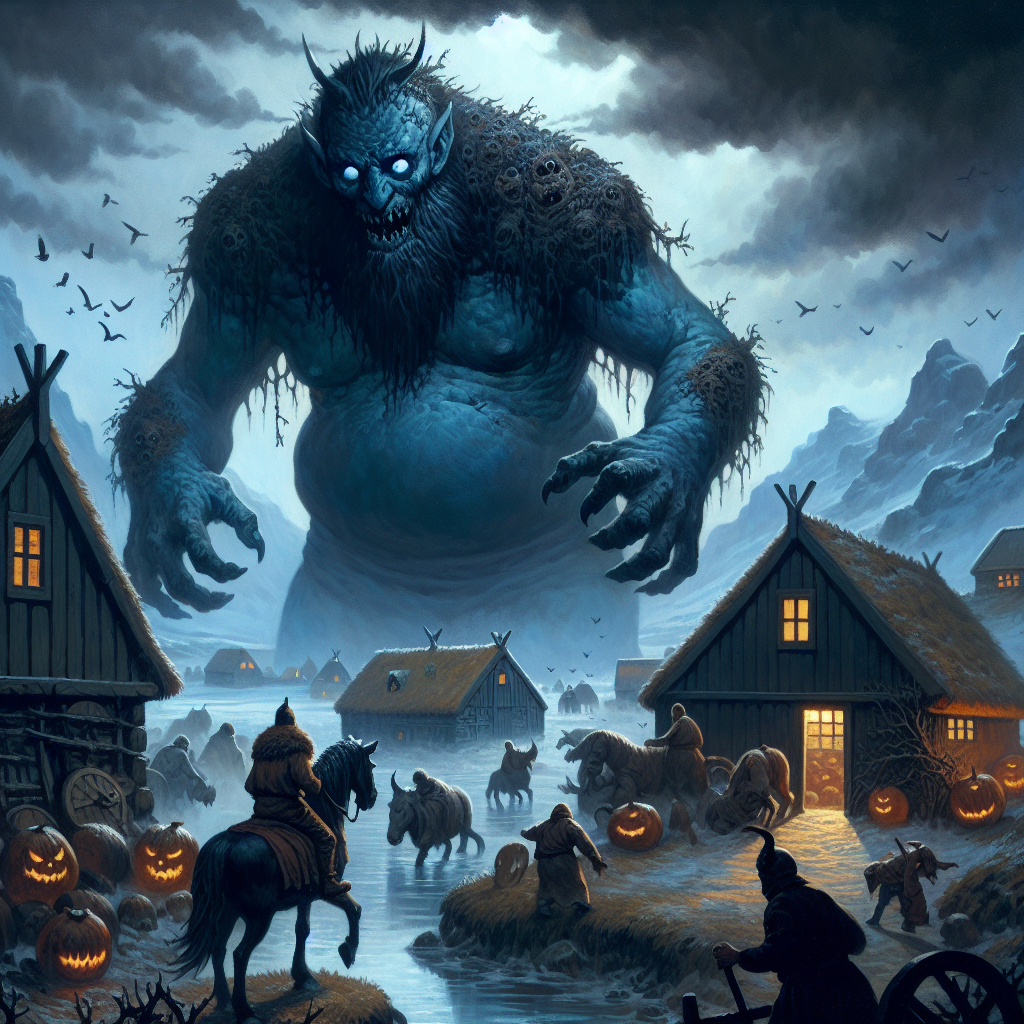
Icelandic walking dead — bloated, blue-black corpses with superhuman strength who terrorize farms. Can grow to gigantic size, control weather, and drive victims insane. Must be wrestled back into their graves
Origin & Background
The ancient Norse term 드라우그르 (draugr) means a malicious spirit, and its origin is believed to derive from the unattested ancient Germanic *draugaz. This means 'phantom', 'illusion', 'mirage', and ultimately derives from the Indo-European root *dʰrowgʰos meaning 'ghost'. Descendants of 드라우그르 include Faroese (dreygur), Icelandic (draugur), and Norwegian (draug, drøg, drog).
The Legend
In Nordic folklore, 드라우그르 is generally depicted as a malicious spirit residing in graves or royal tombs, guarding the treasures buried with them. 드라우그르 is not a ghost but an animated corpse, often appearing as a being with supernatural powers. They typically take on a human form, are physically strong, and have a characteristic decaying smell. 드라우그르 often possesses magical abilities, such as shape-shifting or controlling the weather.
Variants
The variations of 드라우그르 appear differently depending on the region. For example, in Swedish, it is referred to as drög or dröger, while in Norwegian, it is called draug, drøg, or drog. Additionally, in Shetland dialect, it is known as drow or trow, which means 'malicious spirit' or 'troll'. Similar concepts to 드라우그르 can also be found in Sámi languages, suggesting a common loanword origin.
In Popular Culture
드라우그르 frequently appears as a theme in modern popular culture. Particularly in fantasy literature and games, 드라우그르 is often depicted as an undead character, with their characteristics and combat styles reinterpreted across various media. Concepts similar to 드라우그르 also appear in the works of J.R.R. Tolkien, which can be seen as inspired by ancient Norse traditions.
This article is based on the Wikipedia article "Draugr" (CC BY-SA 4.0) · Wikipedia
Abilities
- Superhuman power
- Inducing madness
- Weather control