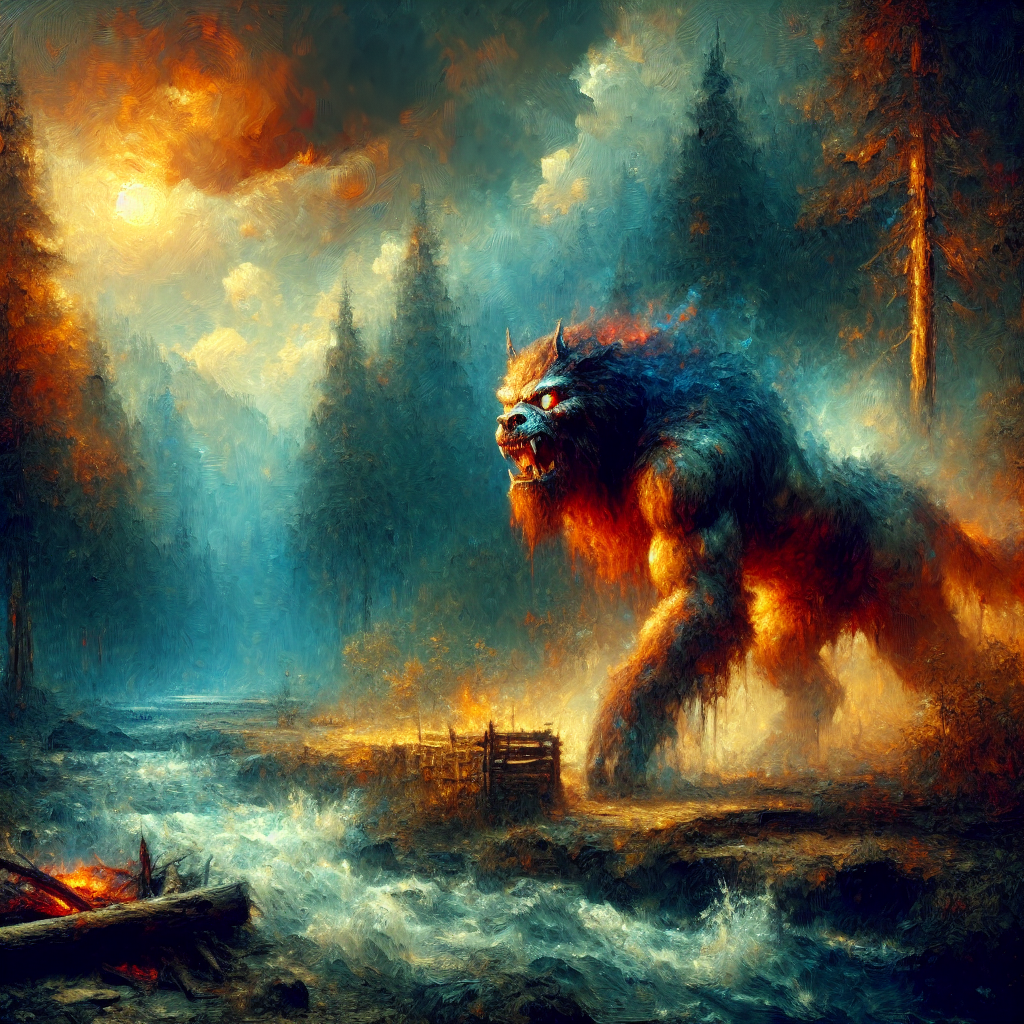
Beerwolf
Description
A beast from the folklore of Germany. A Beerwolf (Bärwolf, Werwolf) is a German folk-tale monster commonly known as a werewolf.
Origin & Background
Beerwolf is a creature from German folklore, commonly known as a werewolf. In 1539, during a debate hosted by Philip of Hesse and the Elector of Saxony, Martin Luther introduced the concept of Beerwolf to describe the Pope and the Emperor. This was a time when Charles V of the Holy Roman Empire was preparing to attack the Lutherans.
The Legend
Beerwolf is conveyed as a being that disrupts law and subverts moral order, unlike a mere tyrant. Luther argued that all subjects have the right to resist such tyrants, even the right to kill him and his supporters. Luther believed that the Emperor and the Pope were precisely such apocalyptic tyrants and saw the current situation as justifying resistance against them.
In Popular Culture
The term Beerwolf holds significant meaning in the theory of resistance. Luther considered active resistance against secular rulers impossible throughout his life, but the concept of Beerwolf represents the most extreme position in his theory of resistance. This concept relies on natural law and presents a different approach from the limited right of resistance recognized in later German constitutional law.
This article is based on the Wikipedia article "Beerwolf" (CC BY-SA 4.0) · Wikipedia
Abilities
- Supernatural power
Weaknesses
- Divine power
Sources
- Wikipedia (German creatures)
Genres
Story Hooks
- A beast from the folklore of Germany. A Beerwolf (Bärwolf, Werwolf) is a German