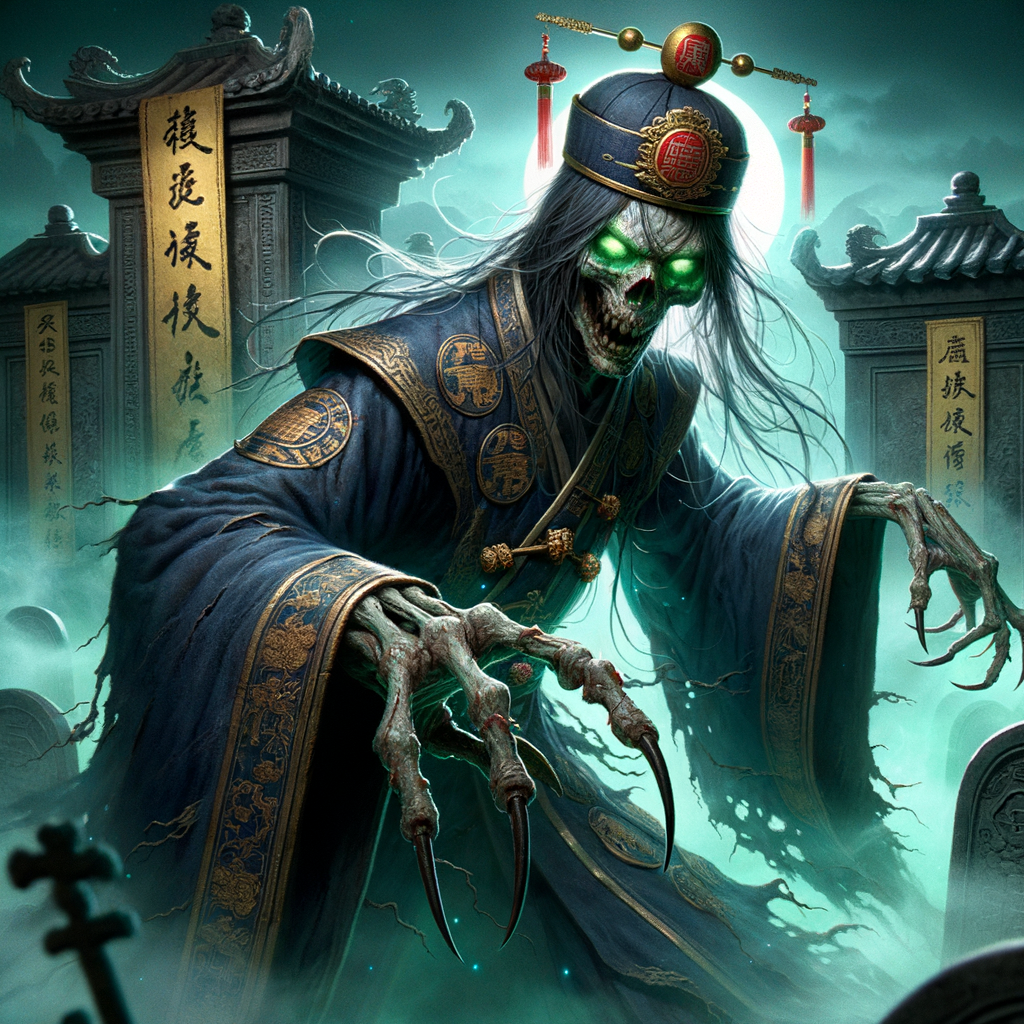
Jiangshi
Description
Hopping vampire-corpse that drains life force, repelled by sticky rice
Origin & Background
The origin of Jiangshi can be classified into two causes, as mentioned by Qing Dynasty scholar Zhi Xiaolan in his work 'Yuewei Caotang Biji' (閱微草堂筆記). The first is the case of a recently deceased person coming back to life, and the second is a corpse that has been buried for a long time but has not decayed. These causes include using supernatural arts to resurrect the dead, the soul inhabiting the dead body, or the corpse absorbing enough Yangqi (positive energy) to return to life. It is also said that a corpse can be revived if it is not buried after the funeral, struck by lightning, or if a pregnant cat jumps over the coffin.
The Legend
Jiangshi is depicted as an undead creature or a reanimated corpse in Chinese legends and folklore. In modern popular culture, it is generally portrayed as a stiff corpse dressed in official Qing Dynasty clothing. According to legend, the jiangshi has the ability to chase people and can also fly if it has been around long enough or absorbed enough Yang energy. There is a legend that 'the jiangshi flies down from the hill and eats people's babies.'
Variants
The Jiangshi legend has inspired films and literary genres in Hong Kong and East Asia. 'Mr. Vampire' and its sequels have become cult classics in the comedy-horror genre, sparking a vampire craze in East Asia, including Taiwan and Japan.
In Popular Culture
In modern popular culture, jiangshi appears in toys and video games. Characters such as Hsien-Ko from 'Darkstalkers', Qiqi from 'Genshin Impact', Chiaotzu from 'Dragon Ball', and Yoshika Miyako from 'Touhou Project' are examples. Additionally, jiangshi costumes are also used during Halloween.
This article is based on the Wikipedia article "Jiangshi" (CC BY-SA 4.0) · Wikipedia
Abilities
- Absorption
Weaknesses
- 찹쌀